Best shoes for metatarsalgia (ball-of-foot pain)
Buying through our links can earn us a commission at no cost to you. As an Amazon Associate we earn from qualifying purchases. How that works. This is general information, not medical advice.
Short answer
For metatarsalgia, look for a shoe with a rocker sole, thick cushioning under the forefoot, a wide toe box and a low heel. The HOKA Bondi 9 checks all four and is our top pick; the Brooks Ghost Max 4 is a similar option in wider widths. If your toes feel squeezed, the Altra Torin 9's foot-shaped toe box gives the most room. Adding a metatarsal pad or an insole with one built in often helps more than the shoe alone.
Metatarsalgia is pain under the ball of the foot, often described as walking on a pebble. Cleveland Clinic recommends shoes with "good soles, a wide toe box and a lower heel," and lists rocker-soled shoes among the treatments. That gives a clear checklist, and our picks follow it. For causes and home care, start with our ball-of-foot pain guide. We research shoes from maker specs, lab reviews and medical guidance; we don't wear-test them (how we pick).
Our picks
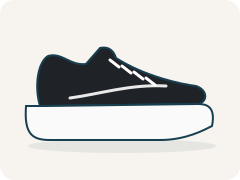
Illustration Best overall for ball-of-foot pain
HOKA Bondi 9
Very thick, soft foam and a rocker shape designed to roll you from heel to toe with less toe bending. Rocker soles have no guideline grade, but many people with heel pain find them comfortable.
- Max cushion with rocker
- 5 mm listed drop (≈9 mm lab-measured)
- Regular, wide, X-wide
- APMA Seal of Acceptance
Skip it if: you feel unsteady on thick soles; try the lower Clifton 11.
See today's priceAmazon prices change often Check price at Amazon-
Best rocker shoe in extra-wide widths
Brooks Ghost Max 4
Brooks' highest-stack everyday shoe: thick DNA LOFT v3 foam, a wide base and a rocker that rolls you forward. Built for walking and standing more than fast running.
- Max cushion with GlideRoll rocker
- 6 mm drop
- About 40 mm heel / 34 mm forefoot
- Wide widths (up to 4E men's)
- Broad, stable base
Skip it if: you prefer a firmer feel; its foam is soft.
See today's priceAmazon prices change often Check price at Amazon 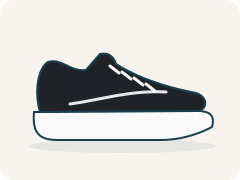
Illustration Lighter rocker for walking and running
HOKA Clifton 11
Less foam than the Bondi but still a rocker, and noticeably lighter. Better if the Bondi feels clunky or you want one shoe for walks and runs.
- Cushioned neutral, rocker
- 8 mm listed drop
- Regular, wide, X-wide
- APMA Seal (per HOKA)
Skip it if: you need the most forefoot cushion; the Bondi has more.
See today's priceAmazon prices change often Check price at Amazon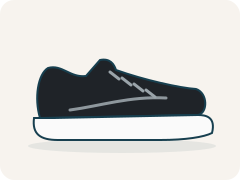
Illustration Most toe room (bunions, neuroma, wide forefoot)
Altra Torin 9
Altra's toe box is shaped like a foot, designed so the big toe and forefoot aren't squeezed. The catch: zero drop puts more load on the Achilles and calf, so ease in slowly and skip it if your Achilles hurts.
- Foot-shaped wide toe box
- Zero drop
- Cushioned neutral
Skip it if: you have Achilles or calf pain; zero drop loads the calf more. Ease in slowly.
See today's priceAmazon prices change often Check price at Amazon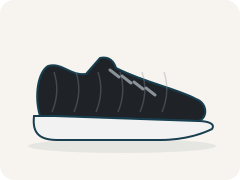
Illustration Extra depth for pads or orthotics (women's)
Orthofeet Coral Women's Sneaker
A deep, soft-sided sneaker built for feet that can't tolerate pressure points. The extra depth leaves room for thicker or prescribed inserts.
- Extra depth
- Removable 1/4" orthotic insole
- Stretch knit upper
- Widths up to 4E (select)
- Seam-free interior
Skip it if: you want a sporty, lightweight running shoe.
See today's priceAmazon prices change often Check price at Amazon
Illustration Extra depth for pads or orthotics (men's)
Orthofeet Edgewater Stretch Men's Sneaker
The men's counterpart: extra depth, removable insoles and spacers to fine-tune volume, and a stretch upper that doesn't press on bunions or hammer toes.
- Extra depth
- Removable insoles + spacers
- Stretch upper
- Widths D to 6E
Skip it if: you want a sporty, lightweight running shoe.
See today's priceAmazon prices change often Check price at Amazon
What makes a shoe good for metatarsalgia
1. A rocker sole
A rocker sole curves up at the toe, so the shoe rolls you forward instead of making your toes bend and push off hard. That push-off is when the metatarsal heads take the most load. Cleveland Clinic lists rocker-soled shoes as a treatment option. Research backs the idea for pressure: a 2020 systematic review of footwear for people with diabetes found strong evidence that rocker soles reduce peak plantar pressure. That study group is different from most people with metatarsalgia, so treat it as supportive rather than proof.
2. Thick forefoot cushioning
Many shoes put most of their foam under the heel. For ball-of-foot pain, the forefoot matters more, so a low-drop, high-stack shoe is a good sign. The Brooks Ghost Max 4 measures about 34 mm under the forefoot in Run Oregon's review, and the HOKA Bondi 9 lists only a 5 mm drop on a max-cushion platform, so most of its foam carries through to the forefoot. Thin, flexible fashion sneakers often have a fraction of that.
3. A wide toe box
Mayo Clinic says to avoid shoes that are too tight, and Cleveland Clinic recommends a wide toe box. Squeezing the forefoot can press the metatarsal heads together, which matters even more if you also have bunions, hammer toes or a Morton's neuroma. Wide and extra-wide widths, or a foot-shaped toe box like Altra's, give the forefoot room to spread.
4. A low heel
Heels push your weight forward onto the ball of the foot. A small 2005 study of ten women found that peak pressure under the central forefoot rose by about 30% in high heels (about 6 cm) compared with low heels (about 2 cm). Most running and walking shoes have a modest drop; the issue is dress shoes and heels. Mayo Clinic advises limiting high heels.
5. Room for a metatarsal pad
Mayo Clinic recommends metatarsal pads placed "just ahead of the metatarsal bone" to keep stress off the painful area. Shoes with a removable insole and some depth make that easy. The simplest route is an insole with the pad built in, like the PowerStep Pinnacle Plus Met. See our metatarsal pads guide for placement and pad types.
How our picks compare
| Shoe | Rocker | Listed drop | Widths | Best for |
|---|---|---|---|---|
| HOKA Bondi 9 | Yes | 5 mm | Regular, wide, X-wide | Most cushion under the forefoot |
| Brooks Ghost Max 4 | Yes (GlideRoll) | 6 mm | Up to 4E (men's) | Soft cushioning, extra-wide feet |
| HOKA Clifton 11 | Yes | 8 mm | Regular, wide, X-wide | Lighter shoe for walking and running |
| Altra Torin 9 | Not a marketed rocker | 0 mm | Check current widths | Toe room, neuromas, bunions |
| Orthofeet Coral / Edgewater | Rocker-inspired (Coral, per Orthofeet) | About 16 mm (Coral, per Orthofeet) | Wide and extra-wide (varies by style) | Extra depth for pads, orthotics, swelling |
A note on drop: a lower drop puts less weight on the forefoot than a high heel, but zero drop shifts more work to the calf and Achilles. If you have tight calves or Achilles pain, a moderate drop (5–10 mm) is the safer middle ground. Orthofeet's higher listed drop is still far lower than a dress heel.
Which shoe for which situation
- General ball-of-foot pain from walking or standing: HOKA Bondi 9 or Brooks Ghost Max 4.
- Pain plus bunions, a wide forefoot or a neuroma: Altra Torin 9, or a wide-width Ghost Max 4. See also best shoes for bunions.
- Pain under the big toe joint specifically: this may be sesamoiditis; a stiff, rockered shoe and a pad that offloads the big toe joint are the usual approach.
- Numbness, burning, or diabetes: extra-depth shoes with seam-free interiors like Orthofeet, and see a clinician. Our shoes for neuropathy guide covers this.
- You run: the Clifton 11 is lighter and still rockered. Cut mileage while it settles, and see a clinician if pain is sharp in one spot.
Mistakes to avoid
- Thin, flexible "barefoot" shoes during a flare. They let the forefoot bend and take impact directly. Some people use them long-term, but not while the ball of the foot is sore.
- Going up a size instead of a width. A longer shoe moves the flex point away from your toes and lets your foot slide forward. If the forefoot is cramped, buy wide.
- Putting a gel cushion right under the sore spot. A metatarsal pad works by sitting behind the painful area and shifting weight off it. Cushion alone often helps less than you'd expect.
- Wearing heels "just for a few hours." Even a few hours in heels pushes extra load onto the ball of the foot. Save them for short events while you recover.
- Keeping worn-out shoes. Forefoot foam compresses with use. If the shoe has deep creases across the forefoot or feels flat, replace it.
- Pain lasts more than two weeks despite better shoes and home care.
- You have numbness or tingling, or you have diabetes.
- There's swelling, a change in foot shape, or pain in one exact spot on a bone (possible stress fracture).
- You can't walk on the foot, or you heard a pop or snap (go to urgent care).
Common questions
What kind of shoes are best for metatarsalgia?
Shoes with a rocker sole, thick cushioning under the forefoot, a wide toe box and a low heel. Cleveland Clinic recommends good soles, a wide toe box and a lower heel, and lists rocker-soled shoes as a treatment option.
Are HOKAs good for metatarsalgia?
Many people with ball-of-foot pain find them comfortable. The Bondi 9 has thick forefoot cushioning and a rocker sole, and comes in wide and extra-wide. If you find it too tall, the Clifton 11 is lower and lighter.
Do rocker-bottom shoes help ball-of-foot pain?
They're designed to roll you forward with less toe bending, which reduces load on the ball of the foot. A 2020 review found strong evidence that rocker soles lower peak plantar pressure, though it studied people with diabetes.
Should I wear zero-drop shoes for metatarsalgia?
A zero-drop shoe avoids the forefoot overload of high heels, and Altra's wide toe box is roomy. But zero drop loads the calf and Achilles more, so ease in slowly, and choose a moderate drop if those areas hurt.
Can the right shoes cure metatarsalgia?
Shoes reduce pressure and pain; they don't fix every cause. Most cases improve with better shoes, metatarsal pads, rest and ice. If pain persists beyond two weeks, a clinician can check for a neuroma, stress fracture or joint problem.
Do I need a metatarsal pad if I have good shoes?
Often yes. Mayo Clinic recommends pads placed just ahead of the metatarsal bone to keep stress off the painful area. An insole with a built-in pad is the easiest way to add one.
Sources
- Cleveland Clinic: Metatarsalgia
- Mayo Clinic: Metatarsalgia, diagnosis and treatment
- Journal of Foot and Ankle Research (2020): Footwear and insole design features that reduce neuropathic plantar forefoot ulcer risk in people with diabetes, a systematic review
- Speksnijder et al. (2005), The Foot: The higher the heel the higher the forefoot-pressure in ten healthy women
- HOKA: Bondi 9 product page
- Orthofeet: Coral women's sneaker product page
- Run Oregon: Brooks Ghost Max 4 review
- Fit2Run: Brooks Ghost Max 4 (widths and features)