Plantar fasciitis: why your heel hurts in the morning and what helps
Buying through our links can earn us a commission at no cost to you. As an Amazon Associate we earn from qualifying purchases. How that works. This is general information, not medical advice.
Short answer
Plantar fasciitis is irritation of the thick band under your foot where it attaches to the heel. The tell is sharp heel pain with your first steps out of bed or after sitting, easing as you walk. What helps most, according to the 2023 physical-therapy guideline: daily calf and plantar fascia stretching, a night splint if mornings are worst, and taping. Supportive shoes and insoles help as part of that plan, not alone. AAOS reports more than 90% of people improve within 10 months of simple treatment.
What it is
The plantar fascia is a ligament-like band that runs from the heel bone to the toes and supports your arch. When it's overloaded, the attachment at the heel gets irritated and painful. It's one of the most common causes of pain on the bottom of the heel, and it often has no single identifiable cause.
Symptoms
- Pain on the bottom of the heel, sometimes into the arch.
- Worst with the first few steps in the morning or after sitting, then easing after a few minutes of walking.
- Often sore after exercise rather than during it.
Who gets it
Mayo Clinic, AAOS and the NHS list the same risk factors: age 40 to 60, high-impact activity like running, long hours standing on hard floors, tight calf muscles, flat feet or high arches, extra body weight, and worn-out or unsupportive shoes.
What actually helps, by strength of evidence
The physical-therapy clinical practice guideline for heel pain (JOSPT, 2023 revision) grades treatments by evidence. Here's how the common options rank:
| Treatment | Guideline grade | What it means for you |
|---|---|---|
| Calf and plantar fascia stretching | A strong | Do it daily. Cheapest, best-supported step. |
| Night splint (1–3 months) for first-step pain | A strong | Worth buying if mornings are the worst part. |
| Taping with other treatment | A strong | Short-term relief over 1–6 weeks. |
| Manual therapy (hands-on soft tissue, joint work) | A strong | From a physical therapist. |
| Foot orthoses (store-bought or custom) | B against alone; C with others | Use insoles together with stretching and good shoes, not instead of them. |
AAOS, Mayo Clinic and the NHS also recommend cushioned, supportive shoes, avoiding flat shoes, flip-flops and walking barefoot, plus ice and short courses of anti-inflammatory pain relievers. Cleveland Clinic advises not taking NSAIDs for more than about 10 days in a row without talking to a clinician.
The gear that helps
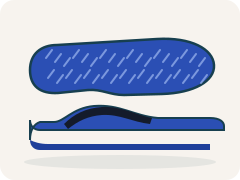
Illustration Best insole for most people
PowerStep Pinnacle Insoles
A firm-but-flexible arch shell with a cushioned top layer and a deep heel cradle. PowerStep designs it to support the arch and cradle the heel.
- Semi-rigid arch support
- Deep heel cradle
- Dual-layer cushioning
- Made in USA
- Swaps in for the factory insole
Skip it if: your shoes have glued-in insoles or very little depth.
See today's priceAmazon prices change often Check price at Amazon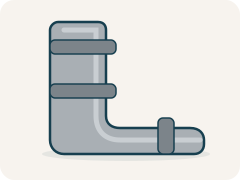
Illustration Best for first-step morning pain
Vive Plantar Fasciitis Night Splint
A boot-style (dorsal-and-back) splint that holds the ankle near 90° while you sleep, so the plantar fascia and calf don't tighten overnight. The foam wedges add a gentle extra stretch when you're ready for it.
- Padded rigid shell
- 2 removable stretch wedges
- 3 adjustable straps
- Left or right foot
- 60-day guarantee
Skip it if: you can't sleep in a boot; try the Strassburg Sock.
See today's priceAmazon prices change often Check price at Amazon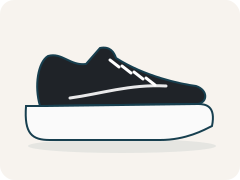
Illustration Best shoe for heel pain
HOKA Bondi 9
Very thick, soft foam and a rocker shape designed to roll you from heel to toe with less toe bending. Rocker soles have no guideline grade, but many people with heel pain find them comfortable.
- Max cushion with rocker
- 5 mm listed drop (≈9 mm lab-measured)
- Regular, wide, X-wide
- APMA Seal of Acceptance
Skip it if: you want a light shoe; see the Clifton 11.
See today's priceAmazon prices change often Check price at Amazon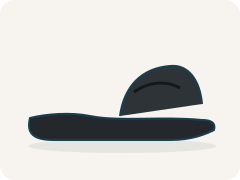
Illustration Best for around the house
OOFOS OOahh Recovery Slide
Very soft, shock-absorbing foam with a cupped heel and arch contour. Many people with plantar fasciitis keep a pair by the bed so their first steps aren't barefoot.
- OOfoam recovery foam
- Contoured footbed
- APMA Seal of Acceptance
- Unisex sizes
Skip it if: you need a lot of arch structure; Vionic slippers are firmer.
See today's priceAmazon prices change often Check price at Amazon
Illustration Best quick fix in any shoe
Tuli's Heavy Duty Gel Heel Cups
A firm gel cup with a multi-cell base designed to absorb impact under the heel. Slips into almost any shoe without replacing the insole.
- Multi-cell, multi-layer gel
- Latex-free
- APMA accepted (per Tuli's)
- Moves between shoes
Skip it if: your pain is mostly in the arch rather than the heel.
See today's priceAmazon prices change often Check price at Amazon
Full comparisons: shoes, insoles, night splints, sandals, slippers, compression socks, foot rollers.
A daily routine that follows the guidelines
- Before getting up: pull your toes back toward your shin for 30 seconds, a few times. Or sleep in a night splint so the fascia doesn't tighten overnight.
- First steps: put on supportive slippers or shoes before you walk. Don't go barefoot on hard floors.
- Twice a day: calf stretches against a wall with the knee straight and bent, and roll the arch over a ball or foot roller.
- All day: cushioned shoes with arch support, with a supportive insole if your shoes are flat.
- After a long day: ice the heel for about 15–20 minutes.
How long it takes
Mayo Clinic says most people recover within a few months of conservative treatment; AAOS puts it at more than 90% improving within 10 months. Injections, shock-wave therapy and surgery exist, but they're for pain that doesn't respond to months of home care.
- Pain is severe or getting worse, or hasn't improved after about 2 weeks of home care (NHS).
- You have tingling, numbness or loss of feeling in the foot.
- The heel is swollen, red and warm, or pain started after an injury.
- You have diabetes or poor circulation.
Common questions
Why does plantar fasciitis hurt most in the morning?
The plantar fascia and calf tighten overnight while your foot points down. The first steps suddenly stretch that tight band, which is why night splints that hold the foot at 90° help many people.
Should I walk barefoot with plantar fasciitis?
AAOS, Mayo Clinic and the NHS all advise avoiding barefoot walking and flat shoes like flip-flops. Supportive slippers or recovery slides at home help.
Do insoles cure plantar fasciitis?
Not on their own. The 2023 physical-therapy guideline recommends against using orthoses as the only treatment for short-term relief, but says they may help combined with stretching, taping and good shoes.
Is plantar fasciitis the same as a heel spur?
No. A heel spur is a bony growth seen on X-rays. Many people have spurs without pain, and AAOS says spurs don't cause plantar fasciitis pain. See our heel spur guide.
Sources
- AAOS OrthoInfo: Plantar Fasciitis and Bone Spurs
- Mayo Clinic: Plantar fasciitis, symptoms and causes
- Mayo Clinic: Plantar fasciitis, diagnosis and treatment
- NHS: Plantar fasciitis
- Cleveland Clinic: Plantar Fasciitis
- ACFAS FootHealthFacts: Plantar Fasciitis
- JOSPT/APTA Clinical Practice Guideline: Heel Pain–Plantar Fasciitis, 2023 revision