Ball-of-foot pain (metatarsalgia): causes and fast relief
Buying through our links can earn us a commission at no cost to you. As an Amazon Associate we earn from qualifying purchases. How that works. This is general information, not medical advice.
Short answer
Metatarsalgia is pain and inflammation under the ball of the foot, just behind the toes. It can be sharp, aching or burning, and often feels like a pebble in your shoe. The usual fixes: shoes with a wide toe box, good cushioning and a lower heel; a metatarsal pad or arch support to shift pressure off the sore spot; ice and rest. If it doesn't settle in a couple of weeks, get checked for a neuroma or stress fracture.
Symptoms
- Sharp, aching or burning pain under the ball of the foot.
- Worse when standing, walking or running, and in high heels.
- A "pebble in the shoe" feeling; sometimes numbness or tingling in the toes.
Common causes
Mayo Clinic and Cleveland Clinic list high-impact sports, high heels, shoes that are too tight, high arches, a long second toe, hammer toes and bunions, extra weight and arthritis. Two look-alikes matter: Morton's neuroma (burning between the toes) and a metatarsal stress fracture.
What helps
- Shoes: good soles, a wide toe box and a lower heel (Cleveland Clinic); low heels and soft soles (NHS).
- Metatarsal pads: Mayo Clinic recommends pads to keep stress off the painful area. Placement matters; follow the package diagram.
- Arch supports: Mayo says they may lessen stress on the metatarsal bones.
- Rest and ice about 20 minutes several times a day, and low-impact exercise like swimming or cycling while it settles.
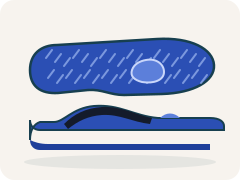
Illustration Insole with a built-in metatarsal pad
PowerStep Pinnacle Plus Met Insoles
Adds a built-in metatarsal pad to the Pinnacle design, adding cushioning under the forefoot. It saves you from placing a loose pad yourself.
- Built-in metatarsal pad
- Neutral arch support
- Deep heel cradle
- Made in USA
See today's priceAmazon prices change often Check price at Amazon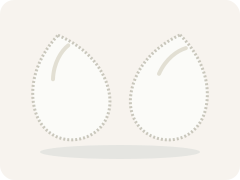
Illustration Classic felt pads to experiment with placement
Moon Health Felt Metatarsal Pads (12-pack)
The classic podiatry pad. Its job is to shift weight off the painful spot, so placement matters: follow the package diagram or your clinician's advice. At twelve pads, it's cheap to experiment.
- 1/4" thick wool felt
- 12 pads
- Stick to insole
See today's priceAmazon prices change often Check price at Amazon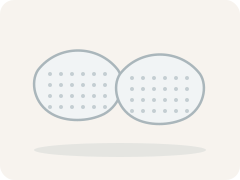
Illustration Thin gel cushion for dress shoes
PediFix Pedi-GEL Ball-of-Foot Pad
A thin gel pad that sticks into the shoe under the ball of the foot. It's a cushion, not an offloader: good for friction and pressure in thin-soled shoes.
- Gel cushion
- Self-adhesive
- 2 count
Skip it if: you need to offload a specific spot; cushioning alone may not be enough.
See today's priceAmazon prices change often Check price at Amazon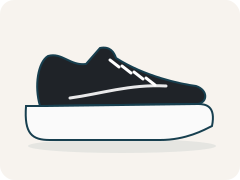
Illustration Cushioned rocker shoe
HOKA Bondi 9
Very thick, soft foam and a rocker shape designed to roll you from heel to toe with less toe bending. Rocker soles have no guideline grade, but many people with heel pain find them comfortable.
- Max cushion with rocker
- 5 mm listed drop (≈9 mm lab-measured)
- Regular, wide, X-wide
- APMA Seal of Acceptance
See today's priceAmazon prices change often Check price at Amazon
More: best metatarsal pads.
- Pain lasts more than a few days to 2 weeks despite home care, or is getting worse.
- You have numbness or tingling, especially with diabetes.
- There's swelling, a change in foot shape, or you can't walk on it (go to urgent care).
Common questions
Where should a metatarsal pad go?
It shouldn't sit directly under the painful spot. Its job is to shift weight off that spot, so place it as the package diagram shows, or ask a podiatrist. Felt pads are cheap enough to adjust.
Are metatarsalgia and Morton's neuroma the same?
No. Metatarsalgia is general ball-of-foot pain; a neuroma is a thickened nerve, usually between the third and fourth toes, causing burning or tingling. A neuroma can cause metatarsalgia.