Night splints for plantar fasciitis: do they work, and which to buy
Buying through our links can earn us a commission at no cost to you. As an Amazon Associate we earn from qualifying purchases. How that works. This is general information, not medical advice.
Short answer
Yes, for the right person. The 2023 physical-therapy guideline gives night splints a strong (Grade A) recommendation for people whose heel pain is worst with the first steps in the morning, used for one to three months. A splint holds your ankle near 90° overnight so the plantar fascia and calf don't tighten. The Vive boot-style splint is the most adjustable; the Strassburg Sock is lighter if you can't sleep in a boot.
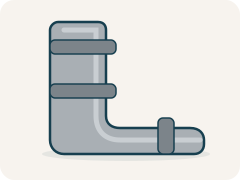
Illustration Best overall (boot style)
Vive Plantar Fasciitis Night Splint
A boot-style (dorsal-and-back) splint that holds the ankle near 90° while you sleep, so the plantar fascia and calf don't tighten overnight. The foam wedges add a gentle extra stretch when you're ready for it.
- Padded rigid shell
- 2 removable stretch wedges
- 3 adjustable straps
- Left or right foot
- 60-day guarantee
Skip it if: you're a restless sleeper who hates rigid braces.
See today's priceAmazon prices change often Check price at Amazon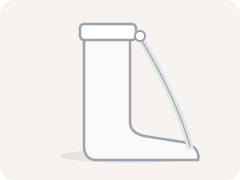
Illustration Best soft alternative
The Strassburg Sock
A soft sock with a strap from the toes to below the knee that keeps the foot gently flexed. Lighter and cooler than a boot, but the stretch depends on how you set the strap.
- Soft knee-high sock
- Strap pulls toes up
- Regular fits calves up to 15"
- Large size for bigger calves
Skip it if: you want a precise, repeatable angle; boots are more consistent.
See today's priceAmazon prices change often Check price at Amazon
| Boot style (Vive) | Sock style (Strassburg) | |
|---|---|---|
| Comfort in bed | Bulkier | Light, cooler |
| Stretch control | Fixed angle; wedges add more | Depends on strap tension |
| Best for | Consistent overnight stretch | People who can't tolerate a boot |
How to use a night splint
- Start with a gentle angle; it should feel like a mild stretch, not pain.
- Wear it for a few hours, then build up to the whole night.
- Keep it up for one to three months, alongside daily stretching.
- Stop and see a clinician if you get numbness, tingling or skin irritation.
Common questions
Can I walk in a night splint?
Most aren't made for walking. Take it off before getting up, then put on supportive slippers.