Best insoles for plantar fasciitis
Buying through our links can earn us a commission at no cost to you. As an Amazon Associate we earn from qualifying purchases. How that works. This is general information, not medical advice.
Short answer
The best insole for most people with plantar fasciitis is the PowerStep Pinnacle: a semi-rigid arch, a deep heel cradle and enough cushioning to wear all day. If your feet roll inward, go with the Pinnacle Maxx; for high arches, Superfeet Green. Be realistic: the 2023 physical-therapy guideline says insoles alone aren't enough for quick relief. They work best combined with daily stretching and supportive shoes.
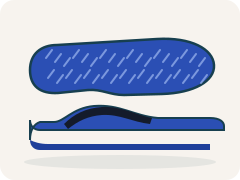
Illustration Best overall
PowerStep Pinnacle Insoles
A firm-but-flexible arch shell with a cushioned top layer and a deep heel cradle. PowerStep designs it to support the arch and cradle the heel.
- Semi-rigid arch support
- Deep heel cradle
- Dual-layer cushioning
- Made in USA
- Swaps in for the factory insole
Skip it if: your shoes are very shallow or have glued-in insoles.
See today's priceAmazon prices change often Check price at Amazon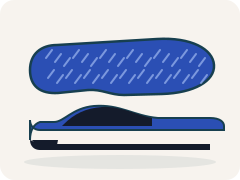
Illustration Best for flat feet / overpronation
PowerStep Pinnacle Maxx Insoles
The Pinnacle shell with an angled (posted) heel that resists the inward roll common with flexible flat feet.
- Angled heel post for overpronation
- Firm arch support
- Deep heel cradle
- Made in USA
Skip it if: you have high, rigid arches.
See today's priceAmazon prices change often Check price at Amazon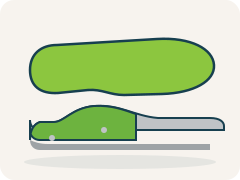
Illustration Best for high arches
Superfeet All-Purpose High Arch Support (Green)
A tall, firm arch shape with a deep heel cup. It fills the space under a high arch, which spreads pressure that would otherwise land on the heel and ball. It needs shoes with some depth.
- High-profile arch
- Deep sculpted heel cup
- High-density foam
- Formerly called Superfeet Green
Skip it if: you need extra cushioning; it's firm.
See today's priceAmazon prices change often Check price at Amazon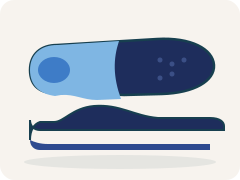
Illustration Best budget first try
Dr. Scholl's Plantar Fasciitis Pain Relief Orthotics
A softer, drugstore orthotic with a deep heel cup and moderate arch support. Less structured than PowerStep, easier to get used to, and sold everywhere.
- Shock-absorbing deep heel cup
- Arch support
- Full length, trim to fit
- Men's and women's versions
Skip it if: you need a lot of structure.
See today's priceAmazon prices change often Check price at Amazon
Illustration Heel-only option
Tuli's Heavy Duty Gel Heel Cups
A firm gel cup with a multi-cell base designed to absorb impact under the heel. Slips into almost any shoe without replacing the insole.
- Multi-cell, multi-layer gel
- Latex-free
- APMA accepted (per Tuli's)
- Moves between shoes
Skip it if: your arch hurts more than your heel.
See today's priceAmazon prices change often Check price at Amazon
How to choose
| Your foot | Choose | Why |
|---|---|---|
| Average arch | PowerStep Pinnacle | Neutral, semi-rigid support plus cushion |
| Flat or rolls inward | PowerStep Pinnacle Maxx | Angled heel post resists inward roll |
| High arch | Superfeet Green | Tall arch fills the gap under the foot |
| Just want to try something | Dr. Scholl's Plantar Fasciitis | Softer, cheaper, easy to find |
What insoles can and can't do
AAOS, Mayo Clinic and Cleveland Clinic recommend over-the-counter arch supports or heel inserts as part of treatment. The JOSPT 2023 guideline is more specific: it recommends against using orthoses as the only treatment for short-term pain relief, and says they may be used combined with other treatment. Translation: buy the insole, but keep stretching.
Getting used to them
Remove the shoe's original insole first, and follow the maker's break-in advice. Stop if you get sharp pain, numbness or blisters. If you have diabetes or neuropathy, check with a clinician before using firm orthotics.
Common questions
Do I need custom orthotics?
Usually not to start. The guideline doesn't favor custom over prefabricated orthoses for plantar fasciitis. Try a good store-bought insole with stretching first.
How long do insoles last?
Firm insoles typically last longer than foam ones. Replace them when the cushioning is flattened or the shell has cracked.