Arch pain: the common causes and how to tell them apart
Buying through our links can earn us a commission at no cost to you. As an Amazon Associate we earn from qualifying purchases. How that works. This is general information, not medical advice.
Short answer
Most arch pain comes from plantar fasciitis (arch and heel pain, worst with first steps), flat feet (tired, achy arches after activity), or high arches. Pain and swelling along the inside of the ankle with a flattening arch is different: it can be posterior tibial tendon dysfunction and should be checked early. For the common causes, a supportive insole matched to your arch type is the first thing to try.
Which one is it?
| Clue | Likely cause | Read |
|---|---|---|
| Arch and heel pain, worst with first steps | Plantar fasciitis | Plantar fasciitis |
| Arch looks flat when standing; achy after activity | Flat feet | Flat feet |
| Inner ankle swollen and sore; arch flattening over time | Posterior tibial tendon problem | Posterior tibial tendonitis |
| Very high arch | High arches (a listed risk factor for plantar fasciitis) | Insole guide |
| Burning or tingling into the arch and heel | Possible nerve irritation (e.g., tarsal tunnel) | Burning feet |
Cleveland Clinic also lists bunions, corns and calluses, bursitis and plantar warts among causes of pain across the sole.
What helps
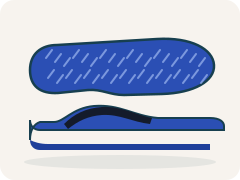
Illustration Neutral arch support for most arches
PowerStep Pinnacle Insoles
A firm-but-flexible arch shell with a cushioned top layer and a deep heel cradle. PowerStep designs it to support the arch and cradle the heel.
- Semi-rigid arch support
- Deep heel cradle
- Dual-layer cushioning
- Made in USA
- Swaps in for the factory insole
See today's priceAmazon prices change often Check price at Amazon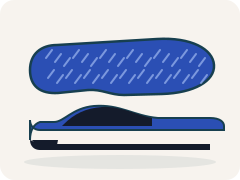
Illustration Flexible flat feet that tire or ache
PowerStep Pinnacle Maxx Insoles
The Pinnacle shell with an angled (posted) heel that resists the inward roll common with flexible flat feet.
- Angled heel post for overpronation
- Firm arch support
- Deep heel cradle
- Made in USA
Skip it if: your arch is visibly collapsing or your inner ankle is swollen; get an exam first.
See today's priceAmazon prices change often Check price at Amazon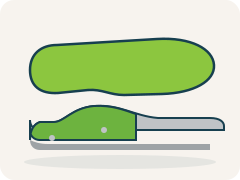
Illustration If you have high arches
Superfeet All-Purpose High Arch Support (Green)
A tall, firm arch shape with a deep heel cup. It fills the space under a high arch, which spreads pressure that would otherwise land on the heel and ball. It needs shoes with some depth.
- High-profile arch
- Deep sculpted heel cup
- High-density foam
- Formerly called Superfeet Green
Skip it if: your shoes are shallow; it needs volume.
See today's priceAmazon prices change often Check price at Amazon
APMA says a functional orthotic can treat the majority of heel and arch pain without surgery. Physical-therapy guidelines are more cautious, supporting insoles mainly as part of a plan with stretching. Both agree on supportive shoes.
- Pain lasts more than 2 weeks without improvement, or is sudden or severe.
- It started after an injury.
- There's swelling along the inner ankle or your arch is visibly changing.
- You have diabetes or circulation problems.
Common questions
Can arch support make arch pain worse?
It can if the shape or size is wrong. Follow the maker's break-in advice, and stop if you get sharp pain, numbness or blisters. If you have diabetes or neuropathy, check with a clinician first.