Flat feet: when they hurt and what actually helps
Buying through our links can earn us a commission at no cost to you. As an Amazon Associate we earn from qualifying purchases. How that works. This is general information, not medical advice.
Short answer
The NHS says flat feet don't usually cause problems and shouldn't stop you doing any activity. If they ache, supportive low-heeled shoes, arch-support insoles and stretching help with pain, though they won't change the shape of your feet. See a doctor if flat feet are painful, stiff, came on suddenly, or affect only one foot.
Flexible vs. rigid
Cleveland Clinic describes flexible flat feet as the common type: an arch shows when you're not standing and disappears when you stand. Rigid flat feet have no arch either way and may be stiff; they're rare and worth a clinician's look.
Flat feet can also develop in adulthood. The most common acquired cause is posterior tibial tendon dysfunction; diabetes-related nerve damage, arthritis and injuries are others.
Symptoms when they cause trouble
Aching feet after activity, tired arches, ankle strain, and sometimes knee, hip or back pain over time.
What helps
The NHS recommends wide, comfortable, low-heeled shoes, supportive insoles, stretching and pain relief. These help with pain and stiffness; they don't rebuild an arch.
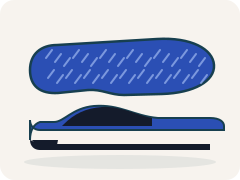
Illustration Insole for flat feet and overpronation
PowerStep Pinnacle Maxx Insoles
The Pinnacle shell with an angled (posted) heel that resists the inward roll common with flexible flat feet.
- Angled heel post for overpronation
- Firm arch support
- Deep heel cradle
- Made in USA
See today's priceAmazon prices change often Check price at Amazon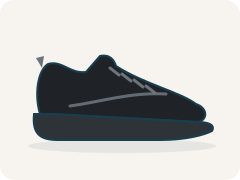
Illustration Stability shoe
Brooks Adrenaline GTS 25
A stability shoe that guides the foot and knee instead of blocking motion. It suits flexible flat feet and people whose arches collapse as they walk.
- Stability (GuideRails)
- 10 mm listed drop
- Narrow to extra-wide
- APMA Seal of Acceptance
Skip it if: you prefer a walking shoe; see the Addiction Walker 2.
See today's priceAmazon prices change often Check price at Amazon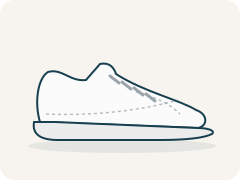
Illustration Maximum stability walker
Brooks Addiction Walker 2
A firm, motion-control leather walking shoe. Heavy, but very stable, which many people with flat feet find comfortable.
- Leather walking shoe
- Motion-control rollbar
- 12 mm drop
- Widths B to 4E
See today's priceAmazon prices change often Check price at Amazon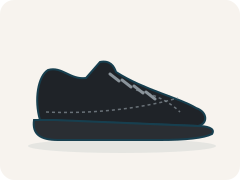
Illustration For wide feet
New Balance 928v3 Walking Shoe
A stable, roomy walking shoe with an unusual range of widths. The removable footbed makes room for custom orthotics.
- Leather walking shoe
- Rollbar stability
- Widths up to 6E (men's)
- Removable footbed
Skip it if: you want something light.
See today's priceAmazon prices change often Check price at Amazon
More: best shoes for flat feet and best insoles for flat feet.
- Your feet are painful, stiff or weak, or you keep getting injured.
- Flat feet came on suddenly, or only one foot is flat.
- You have balance problems or numbness.
Common questions
Do adults with flat feet need orthotics?
Only if they hurt. The NHS says flat feet usually don't cause problems. If they ache, an over-the-counter supportive insole is a reasonable first step.
Can flat feet be fixed?
Insoles and shoes don't change foot shape; they reduce pain and strain. Rigid or worsening flat feet need medical assessment.