Heel spurs: why the spur probably isn't what hurts
Buying through our links can earn us a commission at no cost to you. As an Amazon Associate we earn from qualifying purchases. How that works. This is general information, not medical advice.
Short answer
A heel spur is a calcium deposit on the underside of the heel bone, where the plantar fascia attaches. AAOS says heel spurs do not cause plantar fasciitis pain, and many people have spurs with no symptoms at all. If your heel hurts, treat the plantar fasciitis: stretching, supportive shoes, cushioning heel cups or insoles, and a night splint. Spur removal is rarely needed.
What a heel spur is
Cleveland Clinic describes a heel spur as a bony growth on the underside of the heel bone, often forming in response to long-term strain where the plantar fascia attaches. About 15% of people have one. They're usually found on an X-ray taken for heel pain.
Spur vs. plantar fasciitis
| Heel spur | Plantar fasciitis | |
|---|---|---|
| What it is | Bony growth on the heel bone | Irritated band of tissue under the foot |
| Found by | X-ray | Exam |
| Causes pain? | Usually not on its own | Yes: first-step heel pain |
| Treatment | Treat the plantar fasciitis | Stretching, splints, taping, supportive shoes |
What helps
Because the pain comes from the soft tissue, the treatment is the same as for plantar fasciitis: rest from aggravating activity, ice, anti-inflammatory pain relievers for short periods, calf and arch stretching, and supportive, cushioned footwear or inserts.
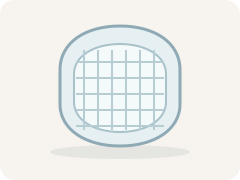
Illustration Cushion the heel in any shoe
Tuli's Heavy Duty Gel Heel Cups
A firm gel cup with a multi-cell base designed to absorb impact under the heel. Slips into almost any shoe without replacing the insole.
- Multi-cell, multi-layer gel
- Latex-free
- APMA accepted (per Tuli's)
- Moves between shoes
See today's priceAmazon prices change often Check price at Amazon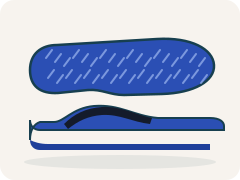
Illustration Arch support plus heel cradle
PowerStep Pinnacle Insoles
A firm-but-flexible arch shell with a cushioned top layer and a deep heel cradle. PowerStep designs it to support the arch and cradle the heel.
- Semi-rigid arch support
- Deep heel cradle
- Dual-layer cushioning
- Made in USA
- Swaps in for the factory insole
See today's priceAmazon prices change often Check price at Amazon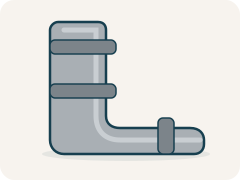
Illustration For morning pain
Vive Plantar Fasciitis Night Splint
A boot-style (dorsal-and-back) splint that holds the ankle near 90° while you sleep, so the plantar fascia and calf don't tighten overnight. The foam wedges add a gentle extra stretch when you're ready for it.
- Padded rigid shell
- 2 removable stretch wedges
- 3 adjustable straps
- Left or right foot
- 60-day guarantee
See today's priceAmazon prices change often Check price at Amazon
Does a heel spur need surgery?
Rarely. Cleveland Clinic notes that surgery is the only way to remove a spur and that it's rarely recommended; the large majority of heel pain improves with non-surgical care.
- Heel pain keeps going despite several weeks of treatment, or limits daily activity.
- Pain started after a fall or injury.
- You have numbness, tingling, or signs of infection.
Common questions
Can heel spurs go away?
The bone growth itself doesn't dissolve, but it usually doesn't need to. The pain people blame on a spur typically comes from plantar fasciitis, which does get better.
Are heel cups good for heel spurs?
They cushion the heel, which many people find comfortable. AAOS and the NHS mention heel pads or cushioning inserts as part of care. They're a comfort measure, not a cure.