Achilles tendinitis: back-of-heel pain, exercises and the right shoes
Buying through our links can earn us a commission at no cost to you. As an Amazon Associate we earn from qualifying purchases. How that works. This is general information, not medical advice.
Short answer
Achilles tendinitis is irritation of the tendon at the back of the heel. It's usually stiff in the morning and worse with activity. For pain in the middle of the tendon, the 2024 physical-therapy guideline's top recommendation is progressive tendon-loading exercise, with relative rest rather than complete rest. Heel lifts may be used temporarily. Many people also find a shoe with a higher heel-to-toe drop more comfortable while it's sore; that's common practice, not a guideline recommendation. A sudden pop at the back of the heel needs immediate medical attention.
Symptoms
- Pain and stiffness at the back of the heel or a few inches above it.
- Stiff in the morning; worse with activity or the day after exercise.
- Thickening or swelling of the tendon; pain where shoes press on the back of the heel.
Common causes
AAOS and Mayo Clinic list sudden increases in exercise, a change of shoes, tight calves, hill running, flat or high arches, extra weight and worn shoes. Certain antibiotics (fluoroquinolones) are also linked to tendon problems.
What helps
The JOSPT 2024 guideline for midportion (mid-tendon) Achilles pain gives its strongest grade to tendon-loading exercise with loads as high as you can tolerate, and advises against complete rest. AAOS's first step is to cut back on the activities that make it worse, so think relative rest: reduce what aggravates it while keeping gentle loading. Heel lifts "may" be used temporarily; evidence on foot orthoses is conflicting. AAOS adds ice, short courses of anti-inflammatories, calf stretching, and shoes that are softer or open at the back of the heel.
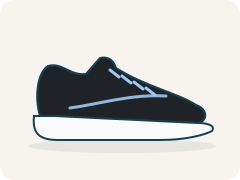
Illustration Cushioned daily shoe with a 10 mm drop
Brooks Ghost 18
A traditional, well-cushioned trainer with a 10 mm heel-to-toe drop. That higher heel takes some strain off the Achilles and calf, which is why it's a common pick for Achilles pain.
- Neutral cushioning
- 10 mm listed drop
- Narrow to extra-wide (B–4E)
- Removable insole
Skip it if: you need stability; consider the Adrenaline GTS 25, also 10 mm.
See today's priceAmazon prices change often Check price at Amazon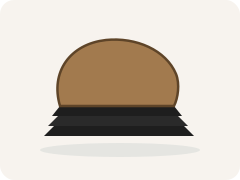
Illustration Short-term heel lift
MARS Wellness Adjustable Heel Lift
Raises the heel slightly so the Achilles works through a shorter range. The guideline for Achilles pain allows heel lifts as a short-term measure; use one in both shoes.
- 3 removable 1/8" layers
- Rubber construction
- Pack of 2
Skip it if: you use it for months; it's a bridge while exercises take effect.
See today's priceAmazon prices change often Check price at Amazon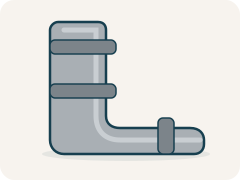
Illustration For morning stiffness
Vive Plantar Fasciitis Night Splint
A boot-style (dorsal-and-back) splint that holds the ankle near 90° while you sleep, so the plantar fascia and calf don't tighten overnight. The foam wedges add a gentle extra stretch when you're ready for it.
- Padded rigid shell
- 2 removable stretch wedges
- 3 adjustable straps
- Left or right foot
- 60-day guarantee
See today's priceAmazon prices change often Check price at Amazon
Many people find zero-drop shoes aggravate a sore Achilles; if yours do, switch to a higher-drop shoe. That's common practice rather than a guideline grade. See best shoes for Achilles tendonitis.
How long it takes
AAOS notes pain may last more than 3 months even with early treatment, though most people improve with non-surgical care over months.
- You felt or heard a pop in the back of the calf or heel; this can be a rupture (AAOS).
- You suddenly can't push off or stand on your toes.
- Pain is severe or doesn't improve with several weeks of care.
Common questions
Should I rest completely with Achilles tendinitis?
Not completely. AAOS says to cut back on activities that make it worse, and the physical-therapy guideline advises against complete rest in favor of progressive loading exercise, adjusted to pain. For pain where the tendon meets the heel bone, get advice before doing heel-drop exercises.
What heel drop is best for Achilles pain?
There's no guideline recommendation on drop. Many people find a traditional drop (the Brooks Ghost is 10 mm) more comfortable than zero-drop shoes while the tendon is sore, and AAOS suggests shoes that are softer or open at the back of the heel.