Plantar fasciitis braces: which type helps, and the best picks
Buying through our links can earn us a commission at no cost to you. As an Amazon Associate we earn from qualifying purchases. How that works. This is general information, not medical advice.
Short answer
The "brace" with the best evidence depends on when it hurts. If the first steps in the morning are worst, a night splint like the Vive boot has a strong recommendation in the physical-therapy guideline. For daytime pain, arch taping also rates well for short-term relief; pre-cut KT Health tape or a reusable arch strap like Tuli's X Brace give you a similar effect. Compression sleeves feel good to many people but have less evidence behind them.
"Plantar fasciitis brace" covers several very different products: thin arch straps, compression sleeves, ankle wraps, tape and night splints. They don't do the same job, and the evidence behind them isn't equal. If you're not sure your heel pain is plantar fasciitis, start with our plantar fasciitis guide. Below are our picks by type, then what each one can and can't do. We research products from maker pages, retailer listings and medical guidance; we don't test them by hand (how we pick).
Our picks
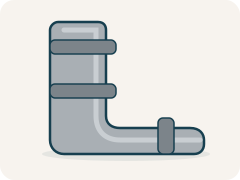
Illustration Best for morning heel pain (night splint)
Vive Plantar Fasciitis Night Splint
A boot-style (dorsal-and-back) splint that holds the ankle near 90° while you sleep, so the plantar fascia and calf don't tighten overnight. The foam wedges add a gentle extra stretch when you're ready for it.
- Padded rigid shell
- 2 removable stretch wedges
- 3 adjustable straps
- Left or right foot
- 60-day guarantee
Skip it if: you toss and turn a lot; a rigid boot can be hard to sleep in.
See today's priceAmazon prices change often Check price at Amazon-
Best for daytime support with the most evidence (tape)
KT Health Plantar Fasciitis Tape (pre-cut)
Pre-cut kinesiology tape shaped for a low-Dye style arch strap. The physical-therapy guideline gives taping a strong recommendation for short-term relief, and pre-cut strips make it easier to do at home.
- 8 pre-cut applications
- Low-Dye style arch and heel support
- Can be worn day and night
- Instruction guide included
Skip it if: you have sensitive skin or a tape allergy, or you want something reusable.
See today's priceAmazon prices change often Check price at Amazon -
Best reusable arch strap
Tuli's The X Brace Arch Support
A low-profile elastic band that crosses under the arch, like a reusable version of arch taping. Thin enough for most shoes. Tuli's suggests starting with a few hours a day.
- Elastic X-strap around the arch
- Sold as a pair
- Sizes by shoe size and arch circumference
- Made in USA
- +PLUS version adds a positioning strap
Skip it if: your shoes are already tight; even a thin strap takes up some room.
See today's priceAmazon prices change often Check price at Amazon -
Most adjustable arch brace
Vive Arch Support Brace (pair)
A wrap-around arch band you tighten with a strap, plus small gel pads you can add under the arch for a bit more lift. More adjustable than an elastic sleeve, but bulkier.
- 3 mm neoprene wrap with hook-and-loop strap
- Removable gel arch inserts (3 per brace)
- One size, arches up to 11" around
- Pair
- 60-day guarantee
Skip it if: you wear slim dress shoes; neoprene and gel pads add bulk.
See today's priceAmazon prices change often Check price at Amazon 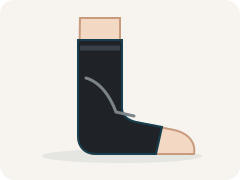
Illustration Best compression sleeve for long days
Thirty48 Plantar Fasciitis Compression Socks
A firm compression sleeve around the arch and ankle. It won't fix plantar fasciitis, but many people find the snug support takes the edge off standing and walking. Not for people with poor circulation.
- 20–30 mmHg compression
- Open-toe ankle sleeve
- 75% nylon, 25% spandex
- Thin enough for most shoes
Skip it if: you have poor circulation or peripheral artery disease.
See today's priceAmazon prices change often Check price at Amazon-
Sleeve you can also wear to bed
McDavid Runner's Therapy Plantar Fasciitis Sleeve
A compression sleeve that covers the arch and ankle with a contoured pad under the arch. McDavid markets it for day wear and overnight; it is softer than a true night splint and doesn't hold a set stretch.
- Left- or right-foot specific
- Contoured arch pad
- Dual compression zones
- Sizes S–XL
Skip it if: you need a true overnight stretch; it doesn't hold the ankle at a set angle like a splint.
See today's priceAmazon prices change often Check price at Amazon 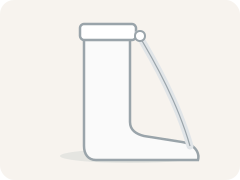
Illustration Soft night splint alternative
The Strassburg Sock
A soft sock with a strap from the toes to below the knee that keeps the foot gently flexed. Lighter and cooler than a boot, but the stretch depends on how you set the strap.
- Soft knee-high sock
- Strap pulls toes up
- Regular fits calves up to 15"
- Large size for bigger calves
Skip it if: you want a precise, repeatable stretch; a boot is more consistent.
See today's priceAmazon prices change often Check price at Amazon
The four types of plantar fasciitis brace
1. Arch straps and bands (daytime)
A band that wraps under the arch and around the top of the foot. Some, like Tuli's X Brace, cross in an X under the arch, similar to how a physical therapist tapes a foot. Others, like the Vive arch brace, are neoprene wraps with a strap and optional gel pads to lift the arch a little more.
Best for: arch and heel pain while standing or walking, in shoes you already own. Limits: they're light support, not a substitute for a supportive shoe or insole.
2. Compression sleeves (daytime)
Elastic sleeves that cover the arch and ankle, like the Thirty48 (20–30 mmHg) or McDavid's sleeve with a contoured arch pad. Many people find the snug feel takes the edge off long days. Compression isn't one of the treatments the guidelines recommend, so think of it as a comfort add-on. More on this in our plantar fasciitis socks guide.
3. Kinesiology or athletic tape (daytime)
Tape applied in an arch-supporting pattern (often called low-Dye taping). Mayo Clinic notes a physical therapist may show you how to tape your foot. Pre-cut kits like KT Health's make it easier to do at home. Tape needs replacing every few days and doesn't suit everyone's skin.
4. Night splints (overnight)
A boot or sock that holds your ankle near 90° while you sleep, so the plantar fascia and calf don't tighten overnight. Morning heel pain is the classic plantar fasciitis symptom, and this is the type most aimed at it. Our night splint guide covers boot vs. sock styles and how to build up wear time.
What about ankle braces and walking boots?
A standard ankle brace supports the ankle joint for sprains; it doesn't target the plantar fascia. A walking boot is different: Mayo Clinic and AAOS say a doctor may recommend one for a short period to rest the foot when other care hasn't worked. That's a decision to make with a clinician, not a first purchase.
What the evidence says
| Type | What guidelines say | Best for |
|---|---|---|
| Night splint | Strong (Grade A) recommendation for 1–3 months when first-step morning pain is consistent (JOSPT 2023) | Morning heel pain |
| Taping (rigid or elastic) | Strong (Grade A) recommendation for short-term relief (1–6 weeks), alongside other treatment (JOSPT 2023) | Daytime pain, short term |
| Arch straps | Not studied as a category; they aim to copy taping in a reusable form | Daytime comfort in your own shoes |
| Foot orthoses / insoles | Not recommended as the only short-term treatment; may help combined with other care (JOSPT 2023) | Ongoing support in shoes |
| Compression sleeves | Not among guideline treatments | Comfort on long days |
| Walking boot | Short-term option a doctor may suggest (AAOS, Mayo) | Stubborn cases, under supervision |
The key point: the 2023 physical-therapy guideline (JOSPT/APTA) rates taping and night splints highly, but always as part of a plan that includes calf and plantar fascia stretching. No brace works well on its own. AAOS also notes a night splint "can be difficult to get used to" but is "very effective at reducing heel pain."
Arch straps are where evidence gets thin. They're designed to mimic taping, which has good evidence, but we couldn't find trials on the strap products themselves. Treat them as a convenient, reusable stand-in for tape and judge them by how your foot feels after a week or two.
How to choose
| If your pain is… | Start with | Add |
|---|---|---|
| Worst with the first steps in the morning | Night splint (Vive boot or Strassburg Sock) | Supportive slippers by the bed |
| Bad during the day, especially standing | KT Health tape or Tuli's X Brace | A supportive insole |
| A dull ache after long shifts | Thirty48 or McDavid compression sleeve | Shoes with thick cushioning |
| Both morning and daytime | Night splint + daytime tape or strap | Daily stretching |
Sizing and fit
- Measure first. Tuli's sizes by shoe size and arch circumference; Vive's brace fits arches up to about 11 inches around; McDavid's sleeve is left- or right-specific in S to XL.
- Snug, not tight. Any numbness, tingling, color change or swelling means it's too tight. Loosen it or stop.
- Build up wear time. Tuli's suggests starting with a few hours a day and working up. The same is sensible for any brace.
- Check room in your shoes. Straps and sleeves add a little volume. If your shoes were already snug, you may need a roomier pair.
Mistakes to avoid
- Relying on a brace alone. Calf and plantar fascia stretching also gets a strong (Grade A) recommendation, for both short- and long-term relief. Pair any brace with daily stretches, and a foot roller if you like massage.
- Wearing a sleeve in unsupportive shoes. A strap in a flat, worn-out shoe won't do much. Start with a cushioned, supportive pair; see best shoes for plantar fasciitis.
- Cranking a night splint to a steep angle. It should feel like a mild stretch. Too much and you'll take it off at 2 a.m.
- Using firm compression with circulation problems. Skip 20–30 mmHg sleeves if you have peripheral artery disease, and ask a clinician first if you have diabetes or neuropathy.
- Ignoring the insole option. If you need support every day, an arch-support insole such as the PowerStep Pinnacle is less fiddly than a strap. Compare options in best insoles for plantar fasciitis, or try heel cups if the pain is mostly under the heel.
- Heel pain hasn't improved after a few weeks of home care.
- You have numbness, tingling or burning, or you have diabetes.
- There's swelling, bruising, or you can't put weight on the foot.
- A brace causes skin breakdown, color change or pain you didn't have before.
Common questions
Do plantar fasciitis braces work?
Some types do. Night splints and taping have strong recommendations in the 2023 physical-therapy guideline, used alongside stretching. Arch straps aim to copy taping but haven't been studied much as products. Compression sleeves are mainly for comfort.
Should I wear a plantar fasciitis brace at night?
If your worst pain is the first steps in the morning, a night splint is the type made for overnight. The guideline suggests a 1–3 month program. Regular daytime arch straps aren't designed for sleeping.
How long should I wear a plantar fasciitis brace each day?
Start with a few hours and build up. Tuli's suggests working up to as many as 12 hours a day for its X Brace. Stop if you get numbness, tingling, skin irritation or new pain.
Is taping or a brace better for plantar fasciitis?
Taping has better evidence for short-term relief. A reusable strap is more convenient and cheaper over time. Many people tape at first, then switch to a strap or insole once they know what helps.
Can you wear a plantar fasciitis brace with shoes?
Yes. Arch straps, sleeves and tape are designed to go inside regular shoes. They take up a little room, so check the fit. Night splints are not for walking; take them off before you get up.
Does a compression sleeve help plantar fasciitis?
Many people find it makes standing more comfortable, but compression isn't among the guideline-recommended treatments. Use it as an add-on to stretching and good shoes, and avoid firm compression if you have circulation problems.
Sources
- JOSPT/APTA Clinical Practice Guideline: Heel Pain–Plantar Fasciitis, 2023 revision
- AAOS OrthoInfo: Plantar Fasciitis and Bone Spurs
- Mayo Clinic: Plantar fasciitis, diagnosis and treatment
- KT Tape: KT Health Plantar Fasciitis Tape
- Medi-Dyne: Tuli's The X Brace +PLUS
- Vive Health Arch Support (SUP1043) product listing
- McDavid Runner's Therapy Plantar Fasciitis Sleeve product listing