Best shoes for standing all day, by job and foot type
Buying through our links can earn us a commission at no cost to you. As an Amazon Associate we earn from qualifying purchases. How that works. This is general information, not medical advice.
Short answer
For most people on their feet all day, the best shoe is a cushioned, stable sneaker with a firm heel counter, arch support and a rocker sole, like the HOKA Bondi 9 or Brooks Ghost Max 4. If your feet roll inward, choose a stability shoe like the Brooks Adrenaline GTS 25. In kitchens and on wet floors, slip resistance comes first: the Skechers Work Arch Fit SR line covers that. Rotate two pairs and replace them before the foam goes flat.
Long hours on hard floors are hard on feet. Canada's workplace health agency (CCOHS) lists sore feet, swollen legs, muscle fatigue and low back pain among the effects of prolonged standing, and Mayo Clinic names jobs that keep you on your feet as a risk factor for plantar fasciitis. The right shoe won't change your floor, but it can change how your feet feel at hour eight. We research shoes from maker specs, lab reviews and medical guidance; we don't wear-test them (how we pick).
Our picks
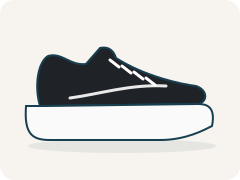
Illustration Best overall for standing on hard floors
HOKA Bondi 9
Very thick, soft foam and a rocker shape designed to roll you from heel to toe with less toe bending. Rocker soles have no guideline grade, but many people with heel pain find them comfortable.
- Max cushion with rocker
- 5 mm listed drop (≈9 mm lab-measured)
- Regular, wide, X-wide
- APMA Seal of Acceptance
Skip it if: you find very thick soles wobbly, or you need slip-resistant shoes for work.
See today's priceAmazon prices change often Check price at Amazon-
Best soft, stable cushioning in wide sizes
Brooks Ghost Max 4
Brooks' highest-stack everyday shoe: thick DNA LOFT v3 foam, a wide base and a rocker that rolls you forward. Built for walking and standing more than fast running.
- Max cushion with GlideRoll rocker
- 6 mm drop
- About 40 mm heel / 34 mm forefoot
- Wide widths (up to 4E men's)
- Broad, stable base
Skip it if: you want a firm, close-to-the-ground feel; it's a tall, soft shoe.
See today's priceAmazon prices change often Check price at Amazon 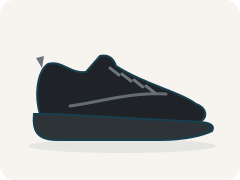
Illustration Best for flat feet and feet that roll in
Brooks Adrenaline GTS 25
A stability shoe that guides the foot and knee instead of blocking motion. It suits flexible flat feet and people whose arches collapse as they walk.
- Stability (GuideRails)
- 10 mm listed drop
- Narrow to extra-wide
- APMA Seal of Acceptance
Skip it if: your arches are high and rigid; a neutral cushioned shoe will feel better.
See today's priceAmazon prices change often Check price at Amazon-
Best slip-resistant shoe for kitchens and wet floors
Skechers Work Arch Fit SR (slip-resistant)
A lightweight work sneaker with a slip-resistant rubber outsole and Skechers' removable Arch Fit insole, which gives moderate arch support. Many styles, from sneakers to leather lace-ups.
- Slip-resistant outsole
- Removable Arch Fit insole (podiatrist-certified per Skechers)
- Lightweight cushioned midsole
- Men's and women's, several styles
Skip it if: you need a lot of cushioning; it's lighter and thinner underfoot than the HOKA or Brooks picks.
See today's priceAmazon prices change often Check price at Amazon -
Best clog for salons, labs and clinics
Dansko Professional Clog
The classic stapled-leather clog. A firm, contoured footbed and a rocker sole let you stand and roll forward without much toe bending. Firm rather than soft.
- Rocker bottom
- About 2" heel
- Roomy reinforced toe box
- Firm heel counter
- APMA accepted (per Dansko)
Skip it if: you have ankle instability or work on stairs and ladders; the tall, rigid sole takes getting used to.
See today's priceAmazon prices change often Check price at Amazon 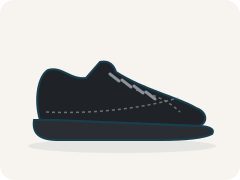
Illustration Best for very wide feet (up to 6E)
New Balance 928v3 Walking Shoe
A stable, roomy walking shoe with an unusual range of widths. The removable footbed makes room for custom orthotics.
- Leather walking shoe
- Rollbar stability
- Widths up to 6E (men's)
- Removable footbed
Skip it if: you want something light; it's a heavy leather walking shoe.
See today's priceAmazon prices change often Check price at Amazon
Best shoes by job
| Job | Main demand | Start with | Watch for |
|---|---|---|---|
| Retail, cashier | Hours of standing still on concrete | HOKA Bondi 9 or Brooks Ghost Max 4 | Very thick soles if you feel unsteady |
| Teachers | Standing plus walking, often in business casual | Brooks Adrenaline GTS 25 or Ghost Max 4 | Flat fashion flats and loafers with no arch |
| Cooks, servers, dishwashers | Wet, greasy floors | Skechers Work Arch Fit SR | Running shoes are not slip-resistant work shoes |
| Warehouse, factory | Concrete, walking, sometimes heavy loads | Slip-resistant shoe; a safety-toe version if required | Your employer's safety-toe and electrical-hazard rules |
| Hair and nail salons | Standing in place, chemicals and hair on the floor | Dansko Professional or a cushioned sneaker | Open-back clogs and mules for long shifts |
Warehouse note: if your site requires safety-toe footwear, check the rating your employer specifies. Skechers sells Arch Fit SR styles with safety toes (for example, alloy-toe versions), and some are marked electrical-hazard (EH) safe. Confirm the rating on the exact model you buy.
How to choose shoes for standing all day
Cushioning vs. support: you need both
Cushioning softens each step on hard floors. Support controls how your foot moves and keeps the arch and heel from collapsing as the day goes on. A shoe that's only soft (a slipper-like sneaker) feels great for an hour and tired by lunch. A shoe that's only firm (a stiff work boot with a flat insole) is stable but punishing on concrete. Look for both.
| Feature | What to look for | Why it matters |
|---|---|---|
| Heel counter | Firm; doesn't collapse when you squeeze it | Keeps the heel centered when you're tired |
| Midsole | Thick foam (roughly 30–40 mm under the heel in our picks); doesn't twist much | Absorbs impact from hard floors |
| Arch support | A shaped footbed, or room for a supportive insole | CCOHS notes that a lack of arch support lets the foot flatten |
| Heel drop | A small heel, not flat and not high (most of our sneaker picks list 5–12 mm of drop) | CCOHS recommends a small heel and warns against very high heels |
| Toe box | Room to wiggle your toes | Feet swell over a shift |
| Rocker sole | Toe curves up from the ground | Rolls you forward with less toe bending |
| Outsole | Slip-resistant rating for wet or greasy floors | Falls are a bigger risk than sore feet in kitchens |
| Closure | Laces you can tighten over the instep | CCOHS recommends lace-ups so the foot doesn't slide |
Match the shoe to your foot
- Flat or flexible arches, feet that roll in: a stability shoe (Adrenaline GTS 25) or a supportive insole in a cushioned shoe. See best shoes for flat feet.
- High, rigid arches: a neutral shoe with lots of cushioning (Bondi 9, Ghost Max 4).
- Heel pain: thick heel cushioning and a rocker. Our plantar fasciitis shoe guide goes deeper.
- Bunions or wide forefoot: a wide or extra-wide width, or a foot-shaped toe box. See best shoes for bunions.
- Burning under the ball of the foot: rocker soles and cushioning help; read our ball-of-foot pain guide.
Shoes vs. insoles
If you like your current work shoes but your feet still ache, an insole may be cheaper than a new pair. Our best insoles for standing all day guide covers cushioned and supportive options. If your shoes are worn out, though, no insole will rescue them.
Make any pair last the shift
- Rotate two pairs. Alternating gives the foam a day to recover between shifts, and you'll notice sooner when one pair is going flat. This is common advice rather than something trials have measured, but it costs nothing if you'd buy a second pair anyway.
- Replace by wear, not by looks. APMA suggests replacing athletic shoes after 600–800 miles of walking or running, or every 6–8 months. For full-time standing, check sooner: deep creases in the midsole, a soft heel counter or a sole worn through the tread pattern mean it's time.
- Shop late in the day when your feet are at their largest, wearing your work socks. APMA suggests having both feet measured and walking around the store before you buy.
- Change position often. CCOHS recommends shifting between positions to spread the load and help circulation. Shift your weight, walk a few steps, or put one foot on a low rail.
- Stretch on breaks. A calf stretch against a wall takes a minute and eases tight calves, a common companion of heel pain.
Anti-fatigue mats, briefly
If you stand in one spot (a register, a prep station, a salon chair), ask about a mat. CCOHS suggests wood, cork or rubber-covered floors over bare concrete, or mats on hard floors, but warns that very thick, soft foam mats can add fatigue and tripping risk. Pick one with beveled edges. A mat helps the spot you stand on; good shoes go everywhere you do.
Mistakes to avoid
- Choosing the softest shoe in the store. Plush foam with no heel structure feels great in the aisle and sloppy by hour six.
- Wearing running shoes in a kitchen. Most aren't slip-resistant. On wet or greasy floors, a slip-resistant work shoe matters more than cushioning.
- Going flat to "rest" your feet. Ballet flats, flip-flops and worn-out canvas sneakers have little arch support. Mayo Clinic and AAOS advise against flat, unsupportive shoes for heel pain.
- Buying too small. Feet swell during long shifts. Leave about a thumb's width beyond your longest toe.
- Waiting for shoes to "break in." APMA advises that shoes should feel supportive and comfortable when you first try them on. If they hurt in the store, they'll hurt more at work.
- Running a pair into the ground. Full-time standing compresses foam faster than you'd expect.
- Foot or heel pain hasn't improved after a few weeks of better shoes and stretching.
- You have numbness, tingling or burning in your feet, especially with diabetes.
- One leg is swollen, red, warm or painful (get checked promptly).
- You have new varicose veins that ache or swell by the end of the day.
Common questions
What shoes do podiatrists recommend for standing all day?
Podiatry groups like APMA focus on features rather than one brand: a firm heel counter, a midsole that doesn't twist much, a toe that bends but not too easily, and a good fit. Several of our picks, including the HOKA Bondi 9 and Brooks Adrenaline GTS 25, also hold APMA's Seal of Acceptance.
Are HOKAs good for standing all day?
Many people find the Bondi 9 comfortable for long shifts because of its thick cushioning and rocker sole. It isn't slip-resistant, so for wet or greasy floors choose a slip-resistant work shoe instead.
Is it better to have soft or firm shoes for standing?
You want both: soft cushioning to absorb impact and a firm structure (heel counter, midsole) to keep the foot stable. Very soft shoes without structure can make tired feet feel worse later in the day.
How often should I replace shoes if I stand all day?
APMA suggests replacing athletic shoes after 600–800 miles or every 6–8 months. If you stand full-time, check every few months for creased midsoles, soft heel counters and worn tread.
Are clogs good for standing all day?
Some people love them. The Dansko Professional has a rocker bottom, a firm footbed and APMA acceptance per Dansko. The tall, rigid sole takes getting used to and isn't ideal if you have unstable ankles.
What are the best shoes for standing on concrete all day?
A cushioned shoe with a firm heel and arch support, such as the HOKA Bondi 9 or Brooks Ghost Max 4. Add a supportive insole if your arches tire, and use an anti-fatigue mat where you stand in one spot.
Do compression socks help when standing all day?
Many people find they reduce leg tiredness and swelling. Check with a clinician first if you have diabetes, neuropathy or circulation problems.
Sources
- CCOHS: Working in a standing position, basic information
- Mayo Clinic: Plantar fasciitis, symptoms and causes
- Mayo Clinic: Plantar fasciitis, diagnosis and treatment
- AAOS OrthoInfo: Plantar Fasciitis and Bone Spurs
- APMA: Balance-boosting footwear tips (shoe checks)
- APMA: Choosing shoes for sports
- APMA: Seal of Acceptance footwear database
- Run Oregon: Brooks Ghost Max 4 review
- Fit2Run: Brooks Ghost Max 4 (widths and features)
- Dansko: Professional clog product page
- Skechers: Work Arch Fit SR product page
- Workboots.com: Skechers Work Arch Fit SR alloy-toe listing