Best shoes for nurses: picks for 12-hour shifts, slick floors and sore heels
Buying through our links can earn us a commission at no cost to you. As an Amazon Associate we earn from qualifying purchases. How that works. This is general information, not medical advice.
Short answer
For most nurses, the HOKA Bondi SR is the best all-round shift shoe: thick rocker cushioning, a slip-resistant rubber outsole, a water-resistant leather upper you can wipe clean, and the APMA Seal. If you want a lighter, breathable shoe and your unit allows mesh, the HOKA Bondi 9 has the same cushioning. The Clove Classic is the most fluid-resistant sneaker, and the Dansko Professional is the pick if you already love clogs.
A 12-hour shift can mean many miles on hard hospital floors, plus spills you didn't see coming. A good nursing shoe has to do three jobs at once: cushion your feet, keep you upright on wet floors, and survive whatever lands on it. We research shoes from maker specs, independent lab data and medical guidance; we don't wear-test them. Here's what we'd shortlist.
Our picks
-
Best overall for nurses
HOKA Bondi SR (Slip-Resistant)
The Bondi's thick, soft cushioning in a leather work version. HOKA designs it for medical and service jobs: a full-contact rubber outsole with slip-resistant tread and an upper that wipes clean. Heavier than the mesh Bondi 9.
- Slip-resistant full-contact rubber outsole
- Water-resistant leather upper
- 6 mm listed drop, early-stage rocker
- Regular and wide
- APMA Seal (per HOKA)
Skip it if: you're on a tight budget or find thick, high soles wobbly.
See today's priceAmazon prices change often Check price at Amazon 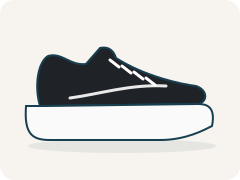
Illustration Most cushioning in a breathable mesh shoe
HOKA Bondi 9
Very thick, soft foam and a rocker shape designed to roll you from heel to toe with less toe bending. Rocker soles have no guideline grade, but many people with heel pain find them comfortable.
- Max cushion with rocker
- 5 mm listed drop (≈9 mm lab-measured)
- Regular, wide, X-wide
- APMA Seal of Acceptance
Skip it if: your unit requires fluid-resistant uppers; mesh soaks up spills.
See today's priceAmazon prices change often Check price at Amazon-
Best fluid-resistant, wipe-clean sneaker
Clove Classic
A sneaker designed around hospital work: a smooth upper that fluids bead off and that you can wipe down, a slip-on fit with a heel pull, and a 10 mm drop. Clove calls the outsole extra-grippy but doesn't name a slip-test standard on the product page.
- Fluid-repellent synthetic leather upper
- Grippy, quiet rubber outsole
- 10 mm drop, 36 mm heel cushion
- Women's 5–13.5, plus men's sizes
- APMA accepted (per Clove)
Skip it if: you need wide widths; Clove only suggests sizing up half a size.
See today's priceSold by the maker Check price at Clove -
Best clog
Dansko Professional Clog
The classic nursing clog. The sole barely bends; instead its rocker shape rolls you forward, and the contoured footbed supports the arch. Dansko says the heel should move up and down freely as you walk, which takes some getting used to.
- Stiff rocker-bottom outsole
- About 2-inch heel
- Contoured footbed, roomy toe box
- Open back; EU sizing
- APMA accepted (per Dansko)
Skip it if: you've ever rolled an ankle or work in a fast-paced unit; the open back and 2-inch heel are less stable than a sneaker.
See today's priceAmazon prices change often Check price at Amazon -
Best for wide feet that need a stable base
Brooks Ghost Max 4
Brooks' thickest everyday shoe: soft DNA LOFT v3 foam, a broad base and a rocker that rolls you from heel to toe. It's built more for walking and standing than for fast running.
- Max cushion with GlideRoll rocker
- 6 mm listed drop
- About 40 mm heel / 34 mm forefoot
- Standard and wide
- Released August 2026
Skip it if: you need a slip-rated outsole; it's a regular road shoe.
See today's priceAmazon prices change often Check price at Amazon -
Best budget slip-resistant shoe
Skechers Work Relaxed Fit Squad SR
An inexpensive, lightweight slip-resistant sneaker with a roomy fit. The memory-foam insole feels soft out of the box but gives little arch support, so add a supportive insole if your heel hurts.
- Slip-resistant outsole (wet, dry, oily)
- Memory Foam insole
- Water-repellent treatment
- 1¼-inch heel, roomy Relaxed Fit
- Men's and women's
Skip it if: you already have heel pain, unless you add a supportive insole.
See today's priceAmazon prices change often Check price at Amazon
Why nurses' feet hurt
Foot pain is common in nursing, and footwear is part of the story. A 2021 cross-sectional study of 366 hospital nurses in Ethiopia found that 43.7% reported ankle or foot pain. Nurses who rated their work shoes as uncomfortable were about four times more likely to report pain (adjusted odds ratio 4.2), and night-shift work roughly doubled the odds. That's one hospital, so treat the exact numbers with caution, but the pattern matches what podiatrists see.
Mayo Clinic lists jobs that keep you standing or walking on hard surfaces as a risk factor for plantar fasciitis, the most common cause of heel pain. A 2024 review of 23 studies on nurses' footwear found the research thin but consistent on a few points: cushioning lowers peak pressure under the foot, arch support and shock-absorbing insoles reduce calf fatigue, and soft, well-ventilated shoes help with swelling.
How to choose nursing shoes
1. Slip resistance you can actually check
"Slip-resistant" on a label can mean a lot of things. The main lab test is ASTM F2913, which ASTM adopted from SATRA's TM144 method. It tests a whole shoe on a set floor (often tile or steel) with a contaminant such as soapy water or oil. A shoe that passes is better than one that wasn't tested, but there's no single pass mark everyone uses, and no lab test covers every floor. If your hospital has a footwear policy, check it first; some require a tested slip-resistant outsole.
2. A fluid-resistant upper
Mesh breathes, but it also absorbs whatever is spilled on it. A smooth leather or synthetic upper wipes clean. The Bondi SR uses water-resistant leather; the Clove uses a fluid-repellent synthetic. Mesh shoes like the Bondi 9 are fine where your unit allows them.
3. Cushioning and a rocker sole
AAOS says shoes with thick soles and extra cushioning can reduce pain with standing and walking. A rocker sole rolls you from heel to toe so the shoe bends less. Rockers haven't been proven to treat heel pain, but many people find them easier on long days.
4. Heel drop and fit
Drop is the height difference between heel and forefoot. Most nursing sneakers sit between 5 and 10 mm. A higher drop eases load on a tight calf or Achilles; a lower drop spreads pressure more evenly. Buy at the end of a shift, when your feet are biggest, and wear the socks you work in.
| Shoe | Type | Listed drop | Upper | Slip claim | APMA Seal |
|---|---|---|---|---|---|
| HOKA Bondi SR | Max cushion, rocker | 6 mm | Water-resistant leather | Slip-resistant outsole | Yes (per HOKA) |
| HOKA Bondi 9 | Max cushion, rocker | 5 mm | Mesh | None | Yes |
| Clove Classic | Cushioned sneaker | 10 mm | Fluid-repellent synthetic | "Extra-grippy" (no standard named) | Yes (per Clove) |
| Dansko Professional | Rocker-bottom clog | About 2" heel | Leather | None on maker page | Yes (per Dansko) |
| Brooks Ghost Max 4 | Max cushion, rocker | 6 mm | Mesh | None | Not confirmed |
| Skechers Squad SR | Work sneaker | 1¼" heel | Knit + synthetic, water-repellent | Slip-resistant (wet, dry, oily) | Not confirmed |
Clogs vs sneakers
Clogs have loyal fans in nursing for good reasons: they slip on and off, they're easy to clean, and a stiff rocker-bottom clog like the Dansko Professional can feel very supportive for standing. The trade-offs are real, though. The NHS advises people with plantar fasciitis to avoid backless shoes, and an open back with a 2-inch heel is easier to roll an ankle in when you're moving fast. Clogs also need a looser fit at the heel, which some people never get used to.
A cushioned sneaker is the safer default if you're new to nursing, you run between rooms, or you already have heel or ankle problems. If clogs already work for you, there's no medical reason to switch.
What about the APMA Seal?
The American Podiatric Medical Association's Seal of Acceptance means a panel reviewed the maker's evidence and found the product beneficial to foot health. APMA says it's a recognition, not an endorsement, and it doesn't mean a shoe treats any condition. It's a useful tie-breaker, not a guarantee of fit.
Do compression socks help on shift?
For leg aching and swelling, there's modest evidence. In a randomized crossover trial of 108 hairdressers, another standing job, light compression stockings (15–20 mmHg) cut leg pain and swelling scores by about 12% and slightly reduced lower-leg volume. A small pilot trial in 20 nursing students found knee-length and thigh-length stockings worked about equally, but thigh-length ones caused more tightness and itching. Knee-high is the practical choice. They help legs, not heels: for heel pain, see our guide to plantar fasciitis socks and sleeves. If you have poor circulation or diabetes, ask a clinician before wearing compression.
Add an insole if your heel or arch hurts
Most nursing shoes ship with a soft, flat foam insole. If you have heel or arch pain, swapping it for a supportive one, such as the PowerStep Pinnacle, often helps more than changing shoes. Our guide to insoles for standing all day covers cushion vs support in detail. Flat feet that roll inward may do better in a stability shoe; see shoes for flat feet.
Mistakes to avoid
- Wearing one pair until it's flat. Mayo Clinic notes worn-out shoes lose support. If you work several shifts a week, rotate two pairs and replace them when the midsole creases or the tread wears smooth.
- Trusting "non-slip" without details. Look for a tested slip-resistant outsole, especially in ED, OR and dialysis units.
- Buying too small. Feet swell over 12 hours. A shoe that fits at 7 a.m. can pinch by 7 p.m., which is how a bunion or a numb forefoot starts to hurt.
- Going barefoot at home after a shift. Medical sources advise against walking barefoot on hard floors with heel pain. Keep a supportive slide or slipper by the door.
- Ignoring pain that lasts. Shoes can make a long shift easier, but they won't fix an injury on their own.
- heel or foot pain hasn't improved after about 2 weeks of self-care, or keeps coming back
- you have numbness, tingling or burning in your feet
- you have diabetes and any foot pain, sore or color change
- you can't bear weight, or the pain started with a pop or a fall
Common questions
What shoes do most nurses wear?
Cushioned running-style sneakers (HOKA, Brooks and similar) and clogs (Dansko is the best-known) are the two most common choices. Healthcare-specific sneakers like Clove add a wipe-clean upper. The right one depends on your unit's rules, your feet and how much you move during a shift.
Are HOKAs good for nursing?
Many nurses like them for the thick cushioning and rocker sole. The Bondi SR is the version made for healthcare work, with a slip-resistant outsole and a water-resistant leather upper. The mesh Bondi 9 is lighter but isn't fluid-resistant.
Are clogs or sneakers better for nurses?
Neither is better for everyone. Stiff rocker-bottom clogs feel supportive for standing and are easy to clean, but the open back and higher heel are less stable when you move fast. A cushioned sneaker with a firm heel counter is the safer default if you have heel pain or weak ankles.
How often should nurses replace their shoes?
There's no fixed rule. Replace them when the midsole looks compressed or creased, the tread is worn smooth, or your feet start aching earlier in the shift than they used to. Rotating two pairs helps each last longer.
What shoes are best for nurses with plantar fasciitis?
Look for thick heel cushioning, a firm heel counter, arch support and a rocker sole, like the HOKA Bondi SR or Bondi 9. Add a supportive insole if the stock one is flat, stretch your calves daily, and see a podiatrist if pain lasts more than a few weeks.
Do nurses need slip-resistant shoes?
Many hospitals require or strongly recommend them, because wet floors are common. Check your employer's footwear policy. A shoe tested to a standard like ASTM F2913 gives more assurance than a general "non-slip" claim.
Sources
- Getie et al. Ankle and foot pain and associated factors among nurses. Journal of Pain Research, 2021
- Bernardes et al. Rehabilitation strategies and footwear recommendations for nurses in standing environments: a narrative review, 2024
- Blazek et al. Compression hosiery for occupational leg symptoms: a randomized crossover trial. Phlebology, 2012
- Lee et al. Compression stocking length effects in nursing students: a pilot randomized trial. Healthcare, 2020
- ASTM: Slip resistance of footwear (F2913)
- Mayo Clinic: Plantar fasciitis, symptoms and causes
- AAOS OrthoInfo: Plantar Fasciitis and Bone Spurs
- NHS: Plantar fasciitis
- APMA: Seal of Acceptance FAQ
- HOKA: Women's Bondi SR product page
- Clove: Women's Classic product page
- Dansko: Professional clog product page
- Running Warehouse: Brooks Ghost Max 4 specs
- Skechers: Work Relaxed Fit Squad SR product page